HomeThe science
Colour from a living thing.
Our strains make the same molecules madder roots, weld leaves and woad have always made, in days instead of seasons, from sugar instead of farmland.
From tank to cloth
Four steps, no oil.


- 01
Teach
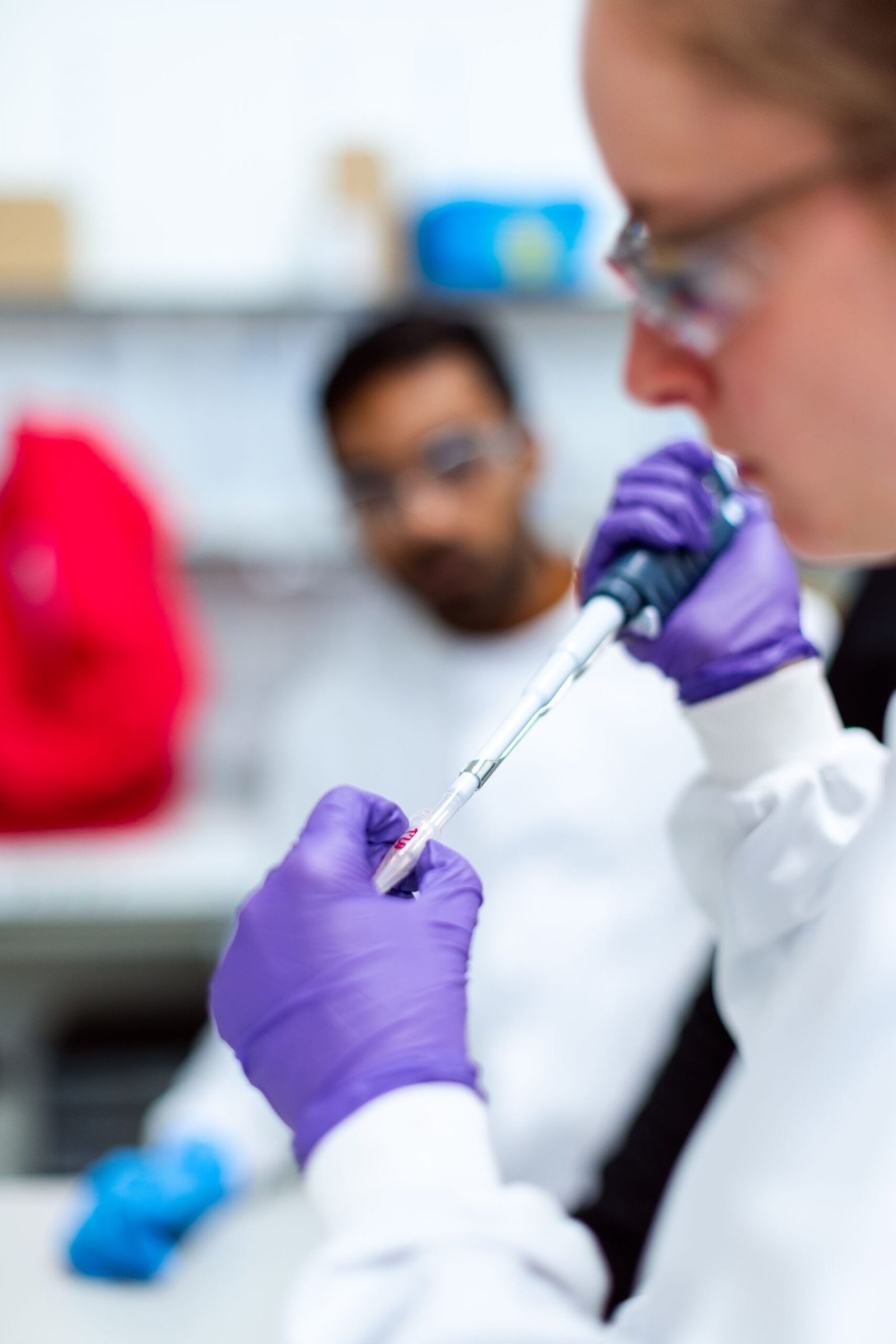
A strain is given the instructions to make one pigment, the same molecule a plant or lichen makes.
- 02
Grow
It feeds on sugar in a steel tank at body temperature. In three days the broth is the colour of the root.
- 03
Dye
The broth goes straight into a standard dyeing machine. The cells carry the colour into the fibre.
- 04
Rinse
One short warm rinse fixes the colour. What leaves the mill is sugar water and spent cells.
Downstream
150litres of water
for every kilo of cloth
A conventional reactive dye run, most of it spent rinsing out dye that never stuck.
Measured at the mill
What changes downstream.
- 90%less water per kilo of cloth
- 40°Cdyeing temperature, not eighty
- 0kgsalt in the dye bath
- 3daysfrom seed tank to dye-ready broth


